Context First
Room, role, procedure, and market precede the model shortlist.

A room-level advisory point of view
An equipment brief becomes useful only when it explains who works in the room, what procedures occur, where contaminated instruments move, and which document proves each requirement.
The planning premise
The clinical team sees access, visibility, handoffs, and patient movement. The facilities team sees utilities, clearances, loads, and installation sequencing. Infection prevention sees dirty-to-clean flow, surface compatibility, and the labeled reprocessing method. Procurement sees reference identity, service terms, recurring inputs, and market documentation.
BTL brings those views into the same brief. The approach does not replace local clinical judgment, facility engineering, or regulatory review. It makes the assumptions visible so each responsible team can test them before approval.
“The useful design question is not ‘Does it fit?’ It is ‘Can every role complete the work without creating a new risk or detour?’”BTL advisory principle
Four operating values
Room, role, procedure, and market precede the model shortlist.
Planning ranges are separated from reference-specific claims.
Clinician, assistant, reprocessing, service, and facility voices are included.
IFU revision, UDI, risk file, and destination-market status remain traceable.
Where the method helps

Background: a room must support different procedures and operator positions. Process: trace reach, visibility, transfer space, utilities, suction, and turnover with representative users. Result: a configuration-specific acceptance checklist that records unresolved fit questions before order release.
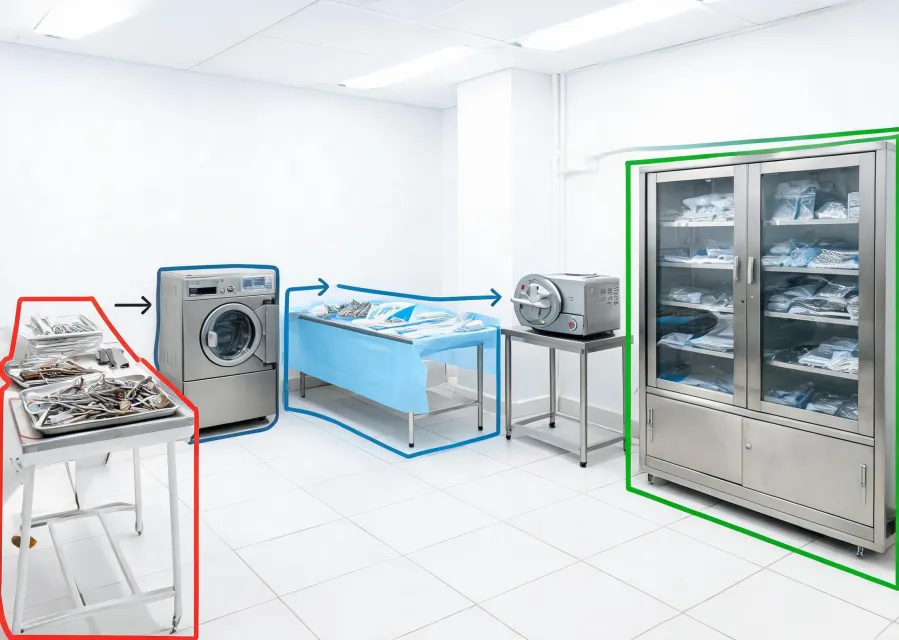
Background: reusable instruments and single-use products create different labor, waste, and cross-contamination controls. Process: align the IFU with receiving, cleaning, inspection, packaging, sterilization, release, storage, and traceability. Result: a documented method trade-off without claiming one route is universally superior.

Background: organization-level certification language can be mistaken for product authorization. Process: map each catalog reference to intended use, current labeling, ISO 14971 risk controls, electrical standards where applicable, and the destination-market record. Result: a dossier gap list routed to the responsible supplier or reviewer.
See how the method fits your project
A focused first brief makes it easier to identify which clinical, facility, infection-control, service, and regulatory questions need owners.